

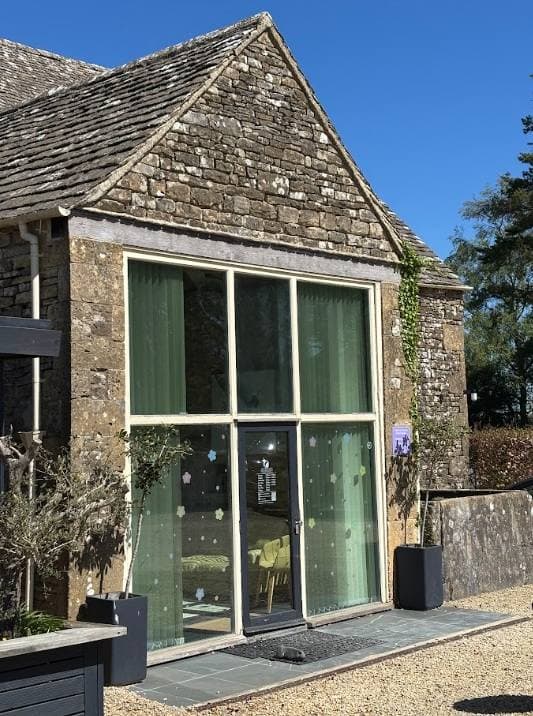
At our practice in the Cotswolds, we practise holistic and biological dentistry. Biological dentistry is an approach rather than a single treatment. It looks at how your mouth fits with your overall wellbeing, favours prevention, keeps natural tooth structure and uses materials chosen for how well your body tolerates them.
Patients travel to Miserden from across Gloucestershire and the UK for this way of working, including London, Bristol, Birmingham, Cardiff, Reading and Newbury: see travelling to us.
Is holistic dentistry right for you?
It may suit you if you:
- prefer preventive and minimally invasive care
- would like metal-free fillings, crowns or implants
- want old amalgam (silver) fillings replaced
- have sensitivities or concerns about dental materials
- want more time to discuss your health and options
- are nervous and would like a calmer experience
What holistic dentistry in the Cotswolds offers here
- Holistic consultation (£180) with Dr Zac Cox or Kerry Braithwaite. An extended appointment covering your dental and medical history, materials and priorities, with up to two X-rays. Before you come, work through our holistic consultation pack.
- A biological health check at the start. With Dr Zac Cox, Kerry Braithwaite and Dr Nikki Izadi, your consultation starts with a biological health check: your mouth, your full medical history and medicines, and how your general health may affect your dental care. If anything suggests you need medical tests or advice, we will suggest you see your GP.
- Consultations with Dr Nikki Izadi (1 hour each, booked online): aesthetic (£180), composite bonding (£180) and arch development (£180). Dr Nikki Izadi does not offer homeopathic consultations; these are with Dr Zac Cox or Kerry Braithwaite. Homeopathy is not dental treatment and is not regulated by the General Dental Council; we do not claim that it treats any dental or medical condition, and it never replaces the dental care you need.
- Biocompatible materials. BPA-free composite fillings, ceramics and metal-free alternatives, chosen with you.
- White fillings for holistic patients. We use Admira Fusion by VOCO as standard. It is a ceramic-based (ORMOCER) white filling material that, according to its maker, contains no classic resin monomers such as Bis-GMA (a BPA derivative), TEGDMA or UDMA.
- SMART safe amalgam removal. Removal of mercury fillings following the IAOMT Safe Mercury Amalgam Removal Technique (SMART), with protective measures for you and the team.
- Metal-free restorations, where suitable. Ceramic crowns, inlays, onlays and bridges, made in our own lab.
- 3D CBCT scanning. Our Planmeca scanner gives a detailed 3D view of the jawbone, which helps when assessing old extraction sites, root-treated teeth and bone for ceramic implants.
- Ceramic (zirconia) implants. A metal-free alternative to titanium for suitable patients.
- Thorough socket cleaning at extractions (cavitation care). When a tooth is removed, Dr Zac Cox, Dr Nikki Izadi and Dr Alexander Doan-Gill carefully clean out the socket, removing any infected or inflamed tissue and any remaining ligament, so the area can heal with healthy bone. Some holistic patients ask about "cavitations": areas of an old extraction site where the bone has not healed fully. If you are concerned about an old extraction site, your dentist can examine it and discuss whether X-rays or a 3D CBCT scan would help.
- Questions about your local anaesthetic. If you have concerns about the anaesthetic used, or a preference about how it is prepared before use, tell us when you book or at the start of your appointment, so your clinician is aware. We can show you the manufacturer's ingredient list, and we will talk through your options with you.
- Synthetic bone grafting. When bone needs rebuilding, Dr Zac Cox uses EthOss, a fully synthetic, animal-free graft material.
- Arch development for children aged 7 to 14. A first step before orthodontics with Dr Nikki Izadi: removable appliances gently develop the growing jaws to make room for the adult teeth, which in some children may reduce the need to take out adult teeth (results vary and are not guaranteed).
- Fluoride-free options. Discussed individually during hygiene visits.
- Nutrition and lifestyle advice. How diet and habits affect your gums and teeth.
Metal-free: what we can and cannot promise
Every mouth is different, so we cannot promise a metal-free result in every case. Your dentist prescribes your treatment, and our laboratory then sets out every metal-free option that is technically possible for that plan, so you can decide together.
For many patients ceramic or zirconia works well. For others, for example where there is already a lot of metal in the mouth, a heavy bite or long spans to bridge, and no immune or sensitivity concerns, the strength of metal may be the most reliable long-term choice. Sometimes there are other routes: closing a gap with a ceramic bridge, or moving teeth with orthodontics (with Dr Nikki Izadi) instead of placing an implant. We will always explain the options, and why, before anything is made.
Gum health and your general health
Research summarised by the British Society of Periodontology links severe gum disease with diabetes and heart disease, although it is not yet clear how much gum disease itself is the cause. International reviews say the same: a Cochrane review (2022) found that gum treatment improved blood sugar control in people with both gum disease and diabetes, while the European Federation of Periodontology and World Heart Federation (Journal of Clinical Periodontology, 2020) and the American Heart Association (Circulation, 2012) report a link with heart disease but no proof that gum disease causes it.
Who does this treatment here
- Dr Zac Cox (BDS, Cardiff, UK, 1992; GDC 67425): dentist with a particular focus on biocompatible materials; outside dentistry, a qualified homeopath (Licentiate of the College of Practical Homeopathy). Over 30 years' experience; SMART amalgam removal, extractions and bone grafting.
- Kerry Braithwaite (Diploma in Dental Hygiene and Therapy; GDC 152813): hygienist and therapist. SMART amalgam removal, gum care, diet and gut-health advice, fluoride alternatives and jaw (TMJ) massage.
- Dr George Lazaridis (MSc Implant Dentistry, University of Warwick, UK; GDC 80364), our implant dentist, places metal-free NobelPearl ceramic implants for patients who want them, as well as titanium systems.
- Dr Nikki Izadi (GDC 115553): aesthetic dentistry, composite bonding and arch development, with a biological health check at the start of every consultation. She does not offer homeopathic consultations.
Biological dentistry here is provided by Dr Zac Cox, Kerry Braithwaite and Dr Nikki Izadi.
Frequently asked questions
Is biological dentistry evidence-based? We use established dental science and recognised clinical techniques. Some areas, such as the wider health effects of materials, are still debated, and we will tell you honestly where the evidence is clear and where it is not.
Do I need my amalgam fillings removed? Not always. Many amalgam fillings are sound. We assess each one and explain the benefits, risks and cost so you can decide.
Are ceramic restorations as strong as metal? Modern ceramics are strong enough for most teeth, but not every case. Your bite, the position of the tooth, any existing metalwork and your preferences guide the choice, and sometimes metal is the strongest and most reliable option.
Do I have to be "holistic" to come here? No. Many patients simply want careful, unhurried dentistry. You choose how much of the holistic approach you want.
Do you use fluoride? We discuss fluoride individually and offer fluoride-free options.
Will you still offer root canal treatment and extractions? Yes. We explain every option, including root canal treatment, extraction and implants, and help you decide.
Does holistic dentistry cost more? Not always. Some materials and lab work can add cost, and you will always receive a written estimate first.
Who you will see
Dr Zac Cox or our hygienist-therapist Kerry Braithwaite. See who to book with for every treatment.
Prices: see our price list for holistic consultations and fillings, or the full fees and plans.
Concerned about dental materials? We encourage you to have any allergy tests done before treatment starts: get your treatment plan from your dentist, then see your dermatologist first, who will say which materials to test. See allergy testing before treatment for the materials to ask about and where to get tested. A sample pack of our materials for your tester is £95 (plus £5.50 postage).
Related treatments
Book your appointment
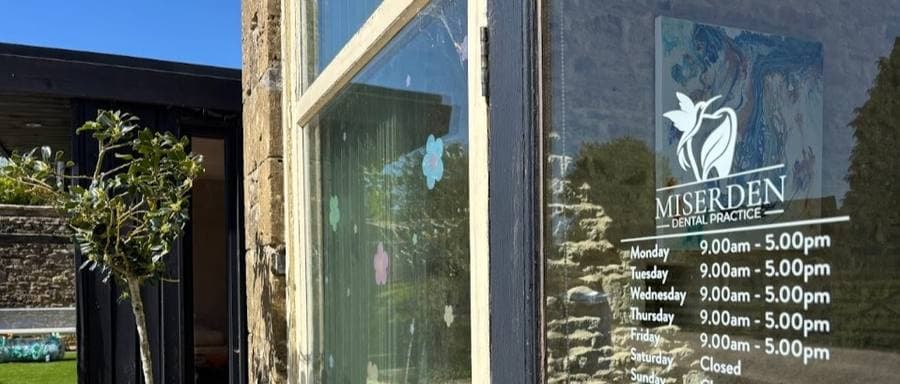
Call 01285 821220 (Monday to Friday, 9am to 5pm) or book a consultation, check-up or hygiene appointment online. We are at The Estate Barn, Miserden, Stroud, Gloucestershire GL6 7JA, in the Cotswolds: about 15 minutes from Stroud, 20 from Cirencester and 25 from Cheltenham, with free parking.